
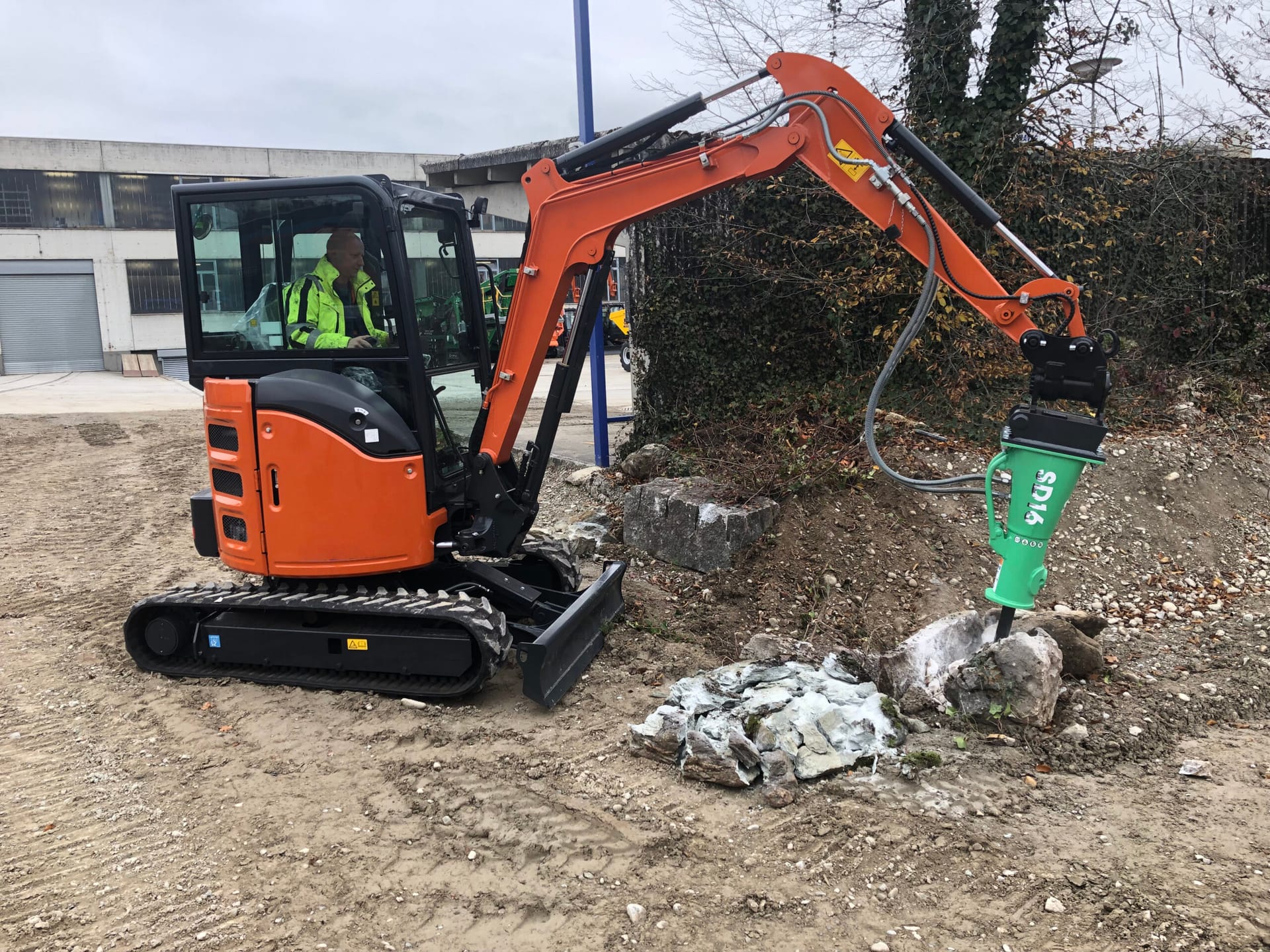
The pool excavation problem in Perth
A typical residential pool dig in Perth metro is 8 to 12 metres long, 4 to 5 metres wide and 2 to 2.5 metres deep. The first 300 to 800 millimetres is sand and fill. Below that you're into Tamala limestone (cemented dune sand), laterite cap, or weathered granite, depending on suburb. South of the river around Bibra Lake, Beeliar and Coogee, expect denser limestone. North of the river through Wanneroo, Joondalup and Yanchep, expect softer cemented sand with occasional hard caps.
The constraint is access. A pool dig through a side gate forces a 3 to 5 tonne carrier even where the geology would prefer a 7 tonne. That mismatch is where productivity gets won or lost.
Choosing the carrier and breaker
- 1.2 metre access (typical residential side gate): 3 tonne carrier with an SD12. Slow but it'll get there.
- 1.5 metre access: 5 tonne carrier with an SD16. The most common Perth metro setup.
- Open access (no side gate): 7 to 8 tonne carrier with an SD22 or SD28. Halves the time on most sites.
On larger acreage and rural pool digs in the Perth Hills, an 8 to 14 tonne carrier with an SD42 or V32 will out-produce two smaller machines and the geology often justifies it.
Tool selection by material
- Cemented sand and soft limestone: wide chisel. Better than a moil because it lifts and separates rather than penetrating.
- Hard limestone caps: moil point. Penetrates the cap and shatters the underlying material.
- Laterite: moil for primary breaking, narrow chisel to clean the excavation walls.
- Weathered granite: moil only. Don't waste a chisel; the granite will glance.
Five practical tips
- Pre-rip with the bucket where you can. A few passes with a tooth bucket break up the cap and let the breaker work the fractured material faster than attacking solid rock.
- Work outside-in for the first metre. Establishing wall lines before you go deep prevents the breaker from chasing rock outwards instead of downwards.
- Carry two tools to site. A moil and a chisel. Tool-change time is minutes; running the wrong tool is hours.
- Watch hydraulic temperature on hot days. Breaking limestone in a confined yard at 40°C ambient drives oil temperature fast. Stop and let the carrier cool if you're seeing fade.
- Plan spoil removal up front. A breaker can produce more rubble than a tipper truck can clear in a day. Stage the work to your truck cycle, not the other way around.